

Star Wars Games Crash Course

Forty years of games, one galaxy, and absolutely no reason to begin at the beginning.
Star Wars games have been around long enough that asking “where should I start?” can feel like being handed the Jedi Archives without a librarian. There are RPGs, shooters, strategy games, LEGO slapstick, racers and titles that once arrived on a heroic number of CDs. The chronological history of Star Wars games is useful if you want to see how enormous the pile has become. It is not, however, a sensible shopping list.
A crash course should do the opposite. The point is to find the door that opens most easily for you. That is the logic behind GateCrashers’ Star Wars Comics Crash Course: a few strong starting points are more useful than pretending completionism is a personality trait. So here are the Star Wars games I would hand to different kinds of newcomers, and what each one teaches you about the galaxy once the controller is in your hands.
Start here
The Bread
The easiest ways into the galaxy

For: the person who wants Star Wars, not homework.
LEGO Star Wars: The Skywalker Saga
Developed by TT Games · Published by Warner Bros. Games · 2022
If your relationship with Star Wars is mostly “I know Vader, I like lightsabers, please do not explain the taxation of trade routes,” start here. The Skywalker Saga runs through all nine films and turns the franchise into a toy box. You can explore, smash things, swap characters and watch sacred cinematic moments get interrupted by a brick-shaped joke.
More importantly, it teaches one of the healthiest lessons a newcomer can learn about Star Wars: this universe is allowed to be silly. You do not need a timeline chart before visiting Tatooine. Sometimes you just need Chewbacca, a pile of studs and a door that can only be opened by an astromech.

For: the modern action-adventure player.
Star Wars Jedi: Fallen Order
Developed by Respawn Entertainment · Published by Electronic Arts · 2019
Fallen Order is the safest recommendation for someone raised on modern third-person adventures. It has exploration, cinematic storytelling, lightsaber combat and enough climbing to make every Jedi Master wonder why nobody installed a ladder. Cal Kestis is a survivor rather than a movie legend, keeping the galaxy large without making it incomprehensible.
It is also a good introduction to the post-Revenge of the Sith era. The Empire is not an abstract evil hanging over the opening crawl; it is a system Cal has learned to hide from. That makes Star Wars feel less like mythology being recited to you and more like a dangerous place somebody has to live in.

For: the story-first RPG player who can forgive 2003 for being 2003.
Knights of the Old Republic
Developed by BioWare · Published by LucasArts · 2003
KOTOR is old enough that its combat sometimes looks like two action figures waiting for invisible dice. If that does not scare you away, it remains a brilliant demonstration of Star Wars as an RPG. Companions argue, decisions accumulate, and the Jedi and Sith become institutions rather than costume departments for heroes and villains.
It also gives you permission to stop treating the films as the centre of the universe. KOTOR takes place thousands of years earlier, in the continuity now usually filed under Star Wars Legends, and yet it feels unmistakably Star Wars. For a newcomer who loves BioWare-style conversations and moral choices, that distance is a feature, not a barrier.
Go deeper
The Meat
Let your favourite genre choose for you

For: the tactics player, including the tactics-curious.
Star Wars: Zero Company
Developed by Bit Reactor · Published by Electronic Arts · 2026
The easiest way to sell Zero Company is not “Star Wars with grids.” It is “a squad you will become weirdly protective of.” Its turn-based battles give movement, shots and rescue attempts weight, while the campaign makes soldiers feel like people rather than numbers. GateCrashers’ own Zero Company review gets at the important part: Hawks is physically in the fight with the squad, so decisions feel personal instead of coming from a faceless commander in the clouds.
For someone intimidated by tactics games, Star Wars helps because the nouns are already friendly. You know what a blaster does. You understand why a droid is a problem. The genre still asks you to think, but the universe translates the battlefield before the tutorial has finished talking.

For: the open-world player who would rather be Han Solo than Luke Skywalker.
Star Wars Outlaws
Developed by Massive Entertainment · Published by Ubisoft · 2024
Outlaws is for the person who looks at a Jedi temple and asks where the back door is. Kay Vess is a thief, not a chosen one, and that immediately changes the texture of the galaxy. Reputation matters. Crime syndicates matter. Cantinas stop being places where heroes receive exposition and become places where somebody might offer work, sell information or decide they hate your face.
That makes it a useful entry point for anyone who enjoys open-world games but finds Jedi mythology exhausting. Star Wars has always had grease under its fingernails: smugglers, gamblers, mechanics, bounty hunters and people trying to make rent while a galactic war happens somewhere above them. Outlaws lets you begin there.

For: the strategy player who has ever looked at the Death Star and thought about logistics.
Star Wars: Empire at War
Developed by Petroglyph Games · Published by LucasArts · 2006
Empire at War turns one of cinema’s most famous good-versus-evil conflicts into resources, production, fleets and territorial pressure. That sounds less romantic than a lightsaber duel, but it reveals something the films can only gesture toward: rebellions need infrastructure. Empires need supply lines. Winning a space battle feels different when you are the person who decided which ships existed in the first place.
It is an older strategy game, but the fantasy is wonderfully clear. If you already understand RTS or grand-strategy thinking, this is one of the rare Star Wars games where your existing genre knowledge does most of the onboarding for you.
The hidden gems
The Special Sauce
Smaller doors that lead somewhere interesting
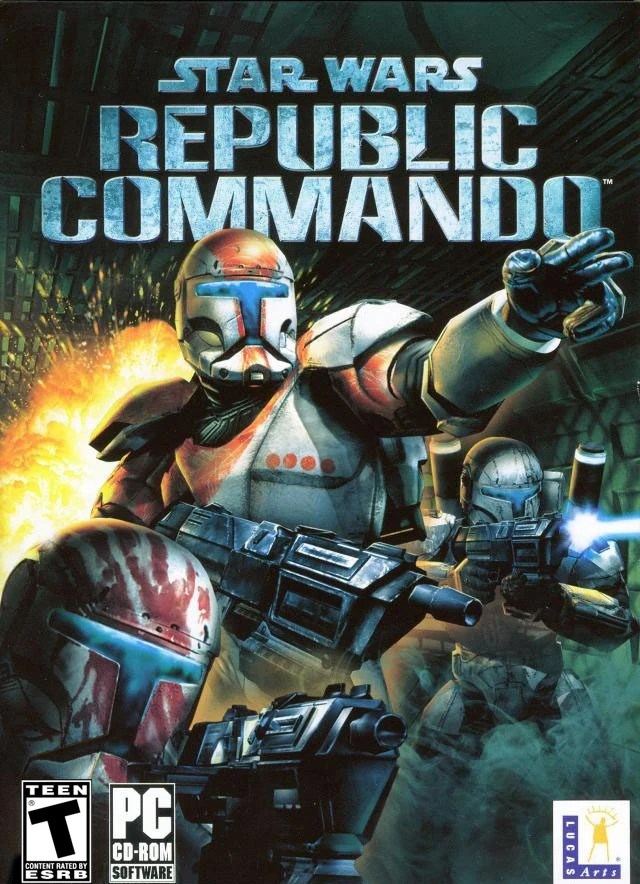
For: the player with one weekend and a weakness for squad banter.
Star Wars: Republic Commando
Developed & Published by LucasArts · 2005
Republic Commando is wonderfully focused. You are not saving every corner of the galaxy, collecting 900 icons or deciding the fate of the Force. You are Delta Squad, you have a mission, and there is usually something unpleasant on the other side of the door. The simple squad-command system lets you feel tactical without turning every corridor into a spreadsheet.
More than almost any Clone Wars game, it teaches you what that conflict looks like from helmet height. The Jedi become distant figures. The clones become people with voices, habits and a job that keeps getting worse. It is short enough to recommend without issuing a lifestyle warning, which is a quality more games should consider.

For: the arcade player who thinks lore should occasionally move at 600 miles per hour.
Star Wars: Episode I Racer
Developed & Published by LucasArts · 1999
Episode I Racer does not care whether you can explain the prophecy of the Chosen One. It cares whether you can keep a podracer from turning into expensive confetti. That is exactly why it works as a newcomer game. The fantasy is immediate, the rules are readable and the connection to The Phantom Menace requires approximately one sentence: this is the sport Anakin was absurdly good at as a child.
Star Wars is often introduced through story, but games can introduce it through sensation instead: engine noise, impossible speed, alien tracks and the feeling that somebody really should have invented seatbelts. If you only have a few evenings, that can be more welcoming than a 60-hour epic.


