


I used to be like you: a doubter. Sure, I saw Avatar two or three times in theaters, but that was just because the movie’s crisp computer animation looked good in 3D. It was baffling that something as unoriginal as “Pocahontas / Dances with Wolves / FernGully: The Last Rainforest in Space” could become the highest-grossing film of all time. Avatar was a fad, a flash in the pan that would vanish from the zeitgeist as quickly as it appeared. After all, how could a film have a lasting cultural legacy if no one remembered its characters’ names? How irrelevant would this thing be by the time the long-delayed sequel finally arrived? Why would one of the most exciting directors of a generation lock himself into this franchise that no one cared about for the rest of his career as a filmmaker? Above all, what was he thinking calling it “unobtanium”?


Over a decade passed between Avatar and its follow-up, Avatar: The Way of Water, and during that time, blockbusters changed. The Marvel Cinematic Universe had become the biggest thing on the planet, and while that was admittedly pretty enjoyable for a while, it wasn’t sustainable. It turns out that when you crank out three movies a year with an interconnected continuity, there’s not much room for filmmakers with a strong creative vision. Everything starts to blend together, as each movie essentially becomes an extensive trailer for a different one later down the line.
Of course, it’s not just Marvel that’s the problem. But a large part of it is other studios looking at the success of the MCU and trying to recreate it by mining strip mining their own existing intellectual properties into interconnected cinematic universes. Now you have Marvel and the rest of Disney and every other studio making the same sort of movie – nay, content – where everyone makes quips and that guy from that one thing you’ve seen makes a surprise appearance.


It’s also worth mentioning that these movies look like shit because there’s a limited pool of visual effects artists they can pull from to meet insane deadlines. I can’t emphasize enough that it’s not the artists’ fault that the computer animation in blockbusters is worsening: it’s all because of the studio heads that commit to more and more movies and streaming shows. “The content must flow.”
All of it makes the modern blockbuster feel so disposable. It’s all diminishing returns, especially when you return to these movies without the context of seeing them in a crowded theater opening night. Seeing Tobey Maguire return as Spider-Man after fifteen years is a magic trick that only really works once. When you watch Spider-Man: No Way Home a second time, that sleight of hand can no longer distract you from the environments looking fake as hell or the dialogue being timed around laughter and applause. It’s essentially a single-use product, like a stick of gum. No amount of sucking is going to bring back that flavor once it’s gone.


Ahead of the release of Avatar: The Way of Water in 2022, I revisited the original film and was blown away by how James Cameron had built that movie to last. Even on a TV over a decade after it was released, Avatar still looks incredible. Many scenes are 100% rendered on a computer, but they feel tangible in a way that other CGI-heavy blockbusters don’t. Cameron knows how to direct action scenes to have weight and tension, and when you throw photorealistic animation into the mix, you’ve got something magical. That’s why Jake running from the Thanator seems more real and dangerous than anything Marvel has done in the last decade.
Also, Avatar is so sincere in everything it does. Characters can feel triumphant or betrayed without someone killing the moment with a joke or a quip. Cameron isn’t afraid to let his characters have genuine emotions, and that means we get some phenomenal performances from the actors. Zoe Saldaña particularly is remarkable as Neytiri, and the way she portrays her grief and rage should have gotten her an Oscar nomination.

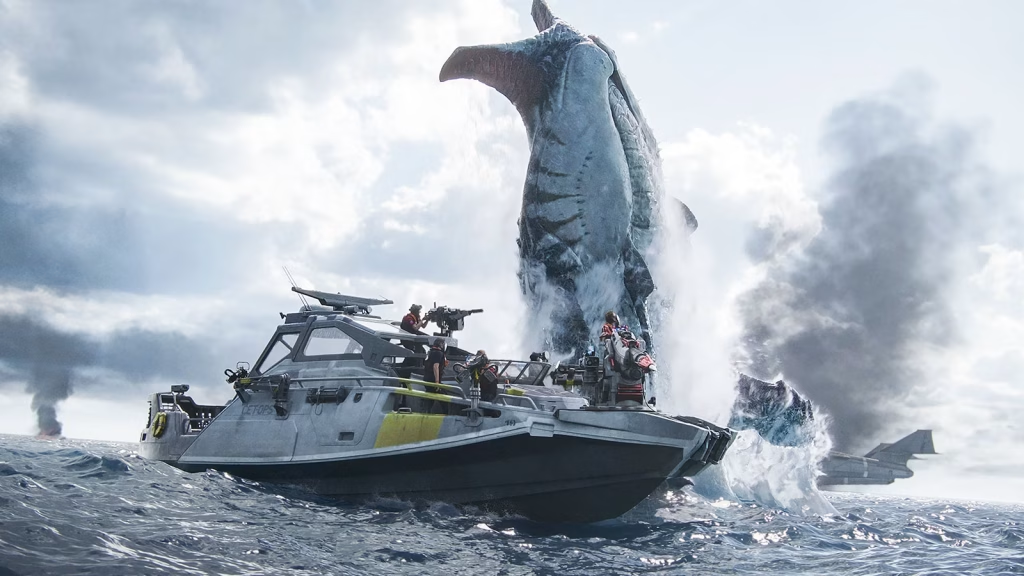
When The Way of Water finally came out, it was like a return to a completely different era of blockbusters. Cameron was operating in his own lane, isolated from the kind of people who leave their creative decision-making to charts and trends. Other movies were wheeling out familiar characters and expecting positive reactions from nostalgic audiences, but Cameron knew that enthusiasm isn’t something a film is entitled to– it has to be earned. It’s not enough for Payakan the Tulkun to just show up on screen. You’ve got to really bond with him and understand him, and that’s what makes you stand up and yell “FUCK EM UP, PAYAKAN!!” when he shows up to wreck the RDA’s ship and save our protagonists. There’s no brand recognition or IP synergy or any of that bullshit – just the excitement of an alien whale rescuing his friends and avenging his dead mother.
The Avatar movies are also unique among modern blockbusters in that they’re the product of one man’s passion. Pandora has been in Big Jim’s head since he had a dream about bioluminescent jungles when he was only nineteen (this man has the wildest dreams), so he’s lived in this world his whole adult life. In retrospect, it feels like his entire filmography has been leading up to this series. So much of the DNA of Cameron’s other projects can be found in the Avatar films– from space marines to sinking ships– that it feels like the franchise is a final exam for everything he’s learned about plotting action and pushing the boundaries of special effects. This is the sum of his life’s work, and he’s summoned the best in the industry to help bring his vision to life. If he needs over a decade to get it right, then that’s what he’ll do, because he actually cares about these films with all of his heart.


I used to be like you: a doubter. But now, I’m grabbing every LEGO Avatar set I can get my hands on and shouting with delight as I feel the mighty Ikran breathing beneath me in Disney World. I’m reading the comics and learning the ways of the Sarentu in Frontiers of Pandora. I watch Payakan fan cams and eagerly await the release of Avatar: Fire and Ash. Most of all, I now know that you always bet on blue. I’ve seen the light, I’ve seen Eywa, and I think general audiences have too based on the wild success of The Way of Water. Cinematic universes seem to be falling out of favor to lengthy, creator-driven blockbusters like Dune, and the long game that Cameron has been playing since 2009 is paying off in ways that the haters could never have predicted. Lighting has struck twice, and by Jake Sully’s bouncing blue ass cheeks, I will show up to theaters to watch it strike again and again and again.

